At first, the home moving process can look rather scary for you – besides being overly expensive, the mere thought of trusting complete strangers with your valuable possessions will probably send shivers down your spine.
Add the arduous task of packing up your home for a move, and you’ll quickly learn why moving to another home is often considered to be one of life’s most stressful events.
The good news is that when you manage to find an affordable moving company (
How to find cheap movers in 7 steps), and then when you complete the packing job quickly and safely (read this article until the end), you’ll have taken care of the two most dreaded tasks when moving to a new home:
1) finding a low-cost moving company (money saved), and
2) packing up your home by yourself (even more money saved).
Packing for a move doesn’t have to be that complicated! Take full control of your packing task by following these top 20 packing tips of all time.
1. Who’s going to pack up your home?
Professional packing services may be the best option when you’re moving long distance across the country and you want the best protection for your valuable possessions. Professional packers won’t get the job done for free, of course, but they have been trained to work fast and know what it takes to achieve a good level of safety.
If you own antique furniture, a piano, a pool table, or anything else that is really expensive, then it’s better to rely on experienced professionals who offer proper insurance as well.
2. Pack by yourself and save money
The single decision to pack on your own can easily save you hundreds of dollars. After all, why should you pay somebody else to do something when you can take care of it yourself?
If you’re moving only a short distance, have reliable friends willing to give you a hand, and don’t own any items that require special packing skills, then yes, you should try to pack up your home by yourself and save money in the process. You’re going to need more time for packing too, as you can never be as quick and efficient as a pro packer. Or can’t you?

A personalized checklist will keep you focused and will save you many hours of precious time.
3. Create a packing calendar
So, let’s assume that you’ve made up your mind to tackle the packing job without professional assistance. What do you need the most? You need good packing tips for moving, of course.
And one of the best packing tips for moving you can ever get is to organize your time with the help of a packing calendar. Stop wasting precious time wondering where to start packing or which items to pack up first. Your personalized packing timeline will “tell” you what you should do next, and how much time you have to complete the task in order to stay on schedule.
4. Start the packing process early
No, you don’t need to wake up too early in the morning – rather, the idea here is that you should begin to pack up your things (pre-packing) as early as your household becomes only a matter of time.
Here’s one of the most efficient packing tips for moving: you can’t start packing too early.
Stop wondering when to start packing for a move and start right now. It won’t be long before you realize why packing is the most time consuming of all move-related activities.
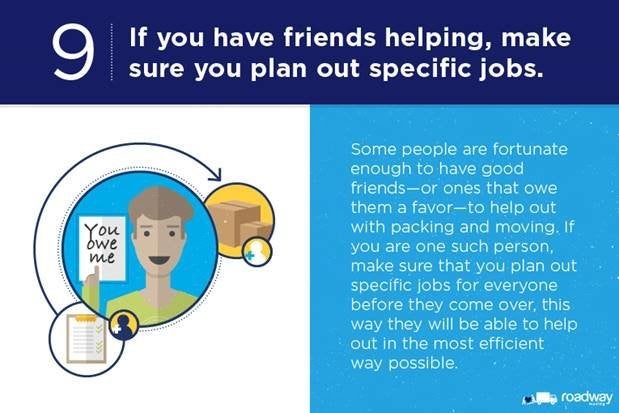
5. Ask friends for packing assistance
Ask yourself this: can you pack up your entire home without any help, not even some support from your closest friends?
A detailed home inventory (see below) will enable you to get a better idea of how many things you plan to move to the new home, including some stuff you have even forgotten you have. You probably won’t manage it entirely on your own, so it’s time to throw a packing party and invite your best pals to help you out with promises for drinks, snacks, fun, and maybe even modest Thank you gifts.
6. Get hold of good packing materials
You can’t start packing for a move without the necessary packing supplies, can you? What’s more, you’re going to need to secure packing materials of good quality, not just whatever comes your way. After all, your cherished home possessions are supposed to survive the relocation journey in them.
White packing paper (soft), brown Kraft paper (hard), Bubble wrap, packing peanuts, a few rolls of packing tape, a set of color markers, blankets or other pieces of old clothing, and newspapers (padding materials do matter).
Oh, and let’s not forget the most essential packing element of them all: packing boxes made of durable corrugated cardboard. LOTS of cardboard boxes!

It looks like our advice on where to get free moving boxes has worked well for you.
7. Get free moving boxes
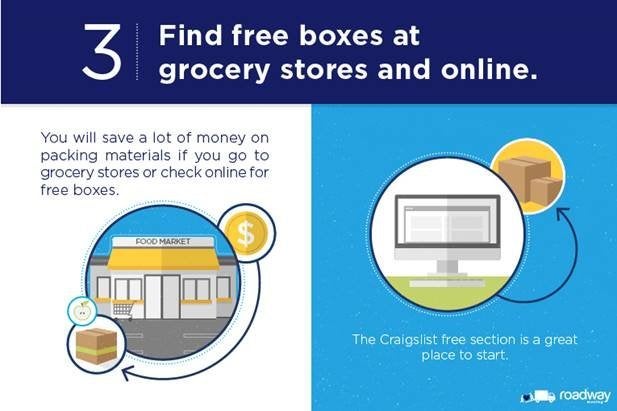
When it comes to smart packing tips for moving, here’s one that is smarter than most: you can get cardboard boxes for free. The only thing you’ll lose is some time to secure those free cardboard boxes, but if time is not pressing you, then you should really take this packing advice seriously.
First of all, check with your friends whether they have any cardboard boxes they won’t need anymore. Secondly, check with local business such as supermarkets, grocery stores, home electronics stores, bookstores, and so on – most of them get frequent shipments of goods and are required to recycle any cardboard boxes they won’t need.
8. Inventory your home
Having followed our helpful packing tips so far, now you will have the necessary packing supplies to get the job done properly. The next challenge in your packing checklist is to decide what items you will pack and move, and what items you will get rid of prior to Moving day.
To help you make a good decision, you’re going to need a detailed house inventory. Sort out your things going from room to room and mark their current condition, so that you can later assess whether or not you need to move those items at all.
9. Get rid of unwanted items
Looking for the best tips when packing for a move? Here’s one: don’t pack and move items that you probably won’t ever use again. Try to be ruthless about this one, for it’s your money that is on the line here.
Moving experts are unanimous that if you haven’t used any items in more than a year, then you should seriously consider getting rid of them. It’s simple, really: any extra baggage will increase the transportation costs as the total shipment weight will go up as well.
Attempt to sell, at a garage sale or online, all the things you’ve decided to leave behind.
10. Do not pack items that are forbidden for transport
Speaking of useful packing tips, this is the perfect time to advise you that you should invest any efforts into packing a number of household items simply because they are forbidden for transport. In other words, professional movers won’t move them for you.
Each moving company has their own list of non-allowables that they hand out to their customers way before Moving day, so make sure you have that list from the very start. Generally speaking, items not to pack when moving include hazardous items (flammable, corrosive or explosive items), perishables (food and plants), pets, and irreplaceable items.

Don’t forget to prepare an essentials box (or boxes) before your movers load your things into their moving van.
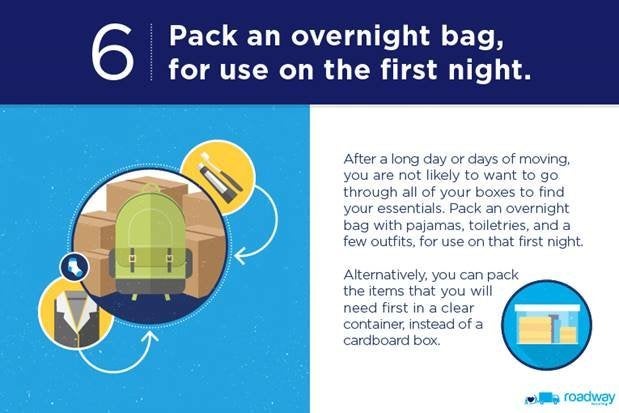
11. Prepare an essentials box
Most of the times, you’re going to need a number of good packing tips and tricks to turn the period of packing up your home into a smooth, quick, and stress-free experience. And one proven way to avoid unpleasant surprises is to prepare an essentials box.
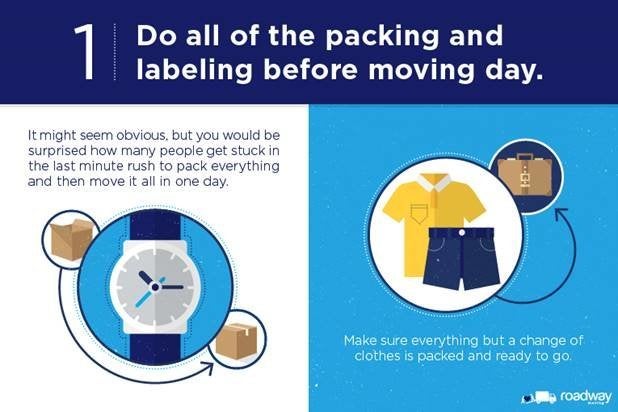
As the name suggests, an essentials box contains things of absolute necessity that you will need while your regular household items are in transit. Make sure you have with you necessities such as toiletries, prescription medication, important documents, a change of clothes for each family member, basic kitchen items, basic tools, and so on.
Don’t forget to pack such an open-first box the day before Moving day, and more importantly – to not hand it by mistake to your movers.
12. Pack quickly when moving home
You need to remember that packing is the most time-consuming task in your packing checklist, so you’d better pay attention to some good tips for packing quickly. You don’t want to greet Moving days with dozens of boxes still to pack, do you?
- Start packing immediately after you know you’re moving for sure.
- Have the necessary packing materials ready.
- Get rid of all unnecessary items prior to packing.
- Do not pack items that are forbidden for transportation.
- Where to start packing? Start packing from the rooms you use the least frequently such as storage areas – your garage, basement, attic, garden shed, etc.
- Adhere to your packing timeline as strictly as you can.
- One of the best packing tips for a quick move? It’s better to pack a little every day (effective!) than to try to pack up your entire home in one giant effort (impossible!).
13. Pack safely when moving house
Safety is a big concern during the packing process – after all, the idea is to make sure your valuable possessions remain well-protected during the relocation trip. As far as safety goes, the best packing tips for moving house are:
- Always double tape the bottoms of cardboard boxes, even if they are brand new.
- Don’t skimp on packing supplies when packing fragile items – wrap them up in several sheets of Bubble wrap and use plenty of padding materials to immobilize them in the boxes.
- Do not make boxes heavier than you can handle them – that’s especially true when packing books for moving. The reasonable weight limit is about 20 pounds per box.
- If you own any specialty items that require professional packing skills, do not hesitate to contact experienced moving experts. Otherwise, you will be risking not only the well-being of your belongings, but your own safety as well.

Be proactive! Label your moving boxes to avoid confusion and lost time.
14. Label your packed boxes
One of the most overlooked packing tips for moving cross country is to label your boxes properly. Do not make the mistake of thinking you’ll remember what’s inside each container just by the look of it. If you do, you’re likely to lose valuable time after the move when you get down to unpacking those same boxes.
What’s more, your movers won’t know which room to deliver the boxes if they are not labeled correctly, and that will lead to further confusion and extra wasted time.
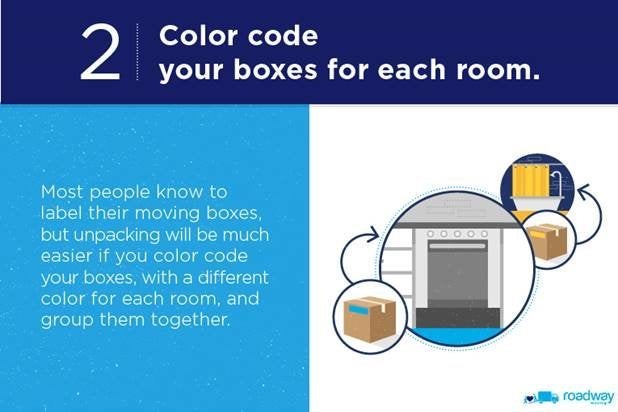
Take your favorite marker and write the contents, destination room, and any handling instructions you think may help. Also, you can choose to use colored codes or a numerical labeling system to make the unpacking process much easier after the move.
15. Avoid common packing mistakes
Sometimes it’s possible that even the best packing tips for moving you just read may not be enough to keep you away from some of the worst packing mistakes you can possibly make. Packing mistakes can be really bad sometimes because they will often cost you time you don’t have, money you’d like to have, and nerves you’d like to spare.
And speaking of mistakes when packing for a move, maybe the worst of them all is to think you can manage the packing process when you it’s obvious that you won’t be able to do it without professional assistance. Factors such as too little time, too valuable items, and too little packing experience should help you reach the best decision under the presented circumstances.
Is it time for professional packers?